
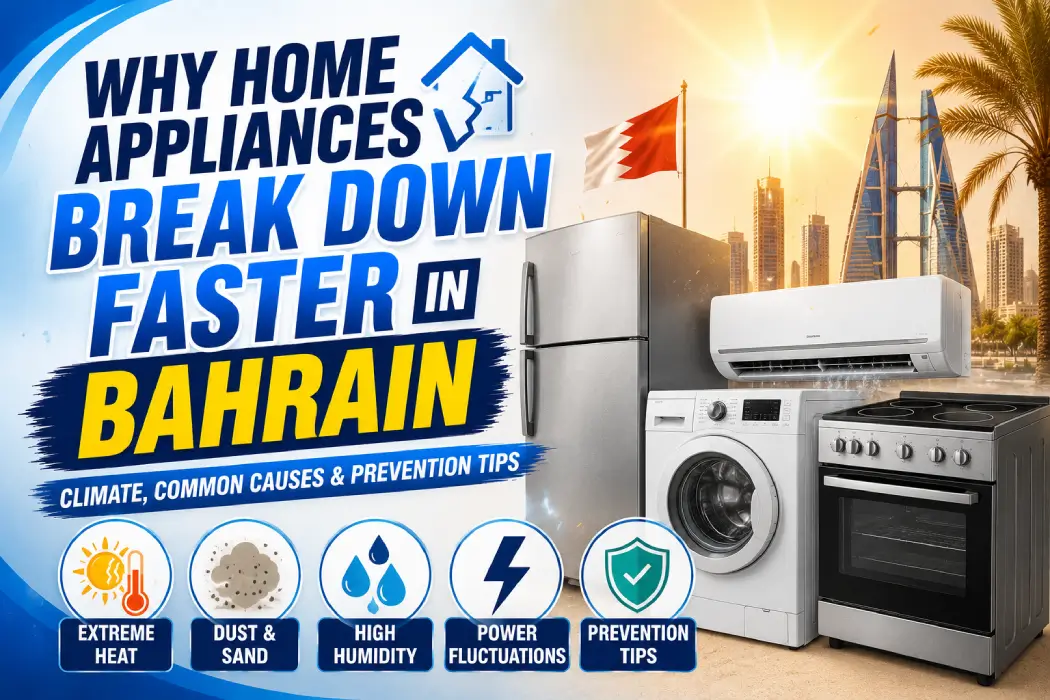
If you’ve lived in Bahrain for more than a year or two, you’ve probably noticed a pattern: appliances here just don’t seem to last as long as they did back home, or as long as the manufacturer’s brochure promised. Air conditioners need gas refills sooner than expected, refrigerators develop cooling issues within a few years, and washing machines start smelling musty faster than seems reasonable.
This isn’t in your head, and it isn’t bad luck either. Bahrain’s climate, combined with how homes and buildings are used here, genuinely does put more strain on home appliances than milder, drier climates do. This guide breaks down exactly why that happens, appliance by appliance, and what you can realistically do to slow it down.
Quick Answer
Home appliances break down faster in Bahrain mainly because of extreme heat, high humidity, dust, and near-constant usage during long, hot summers. These conditions accelerate wear on compressors, seals, electrical components, and coils, meaning appliances often need more frequent maintenance and shorter replacement cycles than in cooler, drier regions.
The Climate Factors Behind the Problem
Understanding why appliances struggle here starts with understanding what they’re actually up against. Bahrain isn’t just hot, it’s hot, humid, dusty, and demanding on cooling and electrical systems for the better part of the year, often with very little seasonal relief for appliances to “rest.”
Extreme Heat for Extended Periods
Summer temperatures regularly exceed 45°C, and this isn’t a brief spike, it lasts for months. Appliances that produce or manage heat, air conditioners, refrigerators, chillers, work far harder for far longer than the same models would in a temperate climate, which shortens component lifespan across compressors and motors.
High Humidity
Bahrain’s coastal location means humidity stays elevated for much of the year, even outside peak summer. Moisture accelerates corrosion on electrical contacts, encourages mold growth in washing machines and dishwashers, and adds strain to dehumidifying components inside air conditioners and refrigeration systems.
Dust and Airborne Particles
Regional dust, combined with construction activity common across growing areas like Riffa, Hamad Town, and parts of Muharraq, settles into condenser coils, air filters, and ventilation systems faster than in cleaner-air environments. This restricts airflow and forces appliances to work harder to achieve the same results.
Near-Constant Usage
Air conditioners in Bahrain often run nearly continuously from May through September. Refrigerators work harder to stay cold against warmer ambient kitchen temperatures. This level of sustained demand, without extended downtime, is simply more intensive than what most appliances are tested and rated for.
How Each Appliance Type Is Affected
While heat, humidity, and dust affect every appliance to some degree, the specific way each one breaks down differs based on how it works.
Air Conditioners (Split & Central)
AC units bear the brunt of Bahrain’s climate more than any other appliance. Compressors run almost nonstop for months, condenser coils collect dust rapidly, and refrigerant systems face more pressure and cycling stress than in cooler regions. This often shows up as reduced cooling capacity, more frequent gas leaks, and shorter compressor lifespans compared to global averages.
Refrigerators
Warmer kitchen ambient temperatures mean refrigerator compressors work harder just to maintain the same internal temperature. Condenser coils accumulate dust faster, and door seals degrade a bit quicker in humid conditions, both of which reduce cooling efficiency and increase energy consumption over time.
Washing Machines
Higher humidity means water inside washing machines, particularly around door seals on front-load models, doesn’t dry out as quickly between uses. This creates ideal conditions for mold and mildew, and combined with sometimes-limited ventilation in enclosed laundry areas, leads to odor and drainage issues appearing sooner than expected.
Dryers
Dust in the air means lint filters and exhaust vents clog faster than in drier, cleaner climates. Combined with high humidity in some laundry areas, dryers often need more frequent airflow-related maintenance to avoid slow drying times and, more importantly, fire risk from blocked vents.
Dishwashers
Hard water, common across parts of Bahrain depending on supply source, contributes to mineral buildup on heating elements and spray arms faster than in areas with softer water. This can reduce cleaning performance and heating efficiency over time if descaling isn’t part of regular maintenance.
Electric Stoves
Heavy, near-daily use across households and especially in restaurants and commercial kitchens wears down heating elements and switches faster than occasional use would. Humidity can also contribute to corrosion on internal wiring connections in older units.
Chiller AC Systems
Commercial chiller systems, common in offices, shops, and restaurants, face similar heat and dust-related strain as residential AC units, but often with even heavier daily runtime. This makes preventive maintenance schedules especially important for chiller systems compared to seasonal residential use patterns.
Irons
Steam irons are affected primarily by Bahrain’s water hardness, which contributes to mineral scale buildup inside the water tank and steam vents. Left unaddressed, this reduces steam output and can eventually clog the unit entirely.
Appliance Wear Factors at a Glance
| Appliance | Primary Bahrain-Related Stress Factor | Common Resulting Issue |
|---|---|---|
| Air Conditioner | Extreme heat, near-constant runtime | Reduced cooling, gas leaks, compressor wear |
| Refrigerator | Warm ambient temperatures, humidity | Weaker cooling, seal degradation |
| Washing Machine | Humidity, limited ventilation | Mold, odor, drainage issues |
| Dryer | Dust, humidity | Clogged vents, slow drying |
| Dishwasher | Hard water | Mineral buildup, reduced cleaning |
| Electric Stove | Heavy daily use, humidity | Element wear, wiring corrosion |
| Chiller AC | Heat, heavy commercial runtime | Accelerated compressor wear |
| Iron | Water hardness | Scale buildup, reduced steam output |
Seasonal Patterns Property Managers and Businesses Should Watch
For property managers overseeing multiple units, and for restaurants, shops, and offices running appliances daily, breakdown patterns tend to follow Bahrain’s seasons fairly predictably. AC-related calls spike sharply from April through September, often overwhelming service availability if maintenance wasn’t scheduled beforehand.
Refrigerator and chiller issues tend to follow a similar curve, since these units are also fighting against higher ambient heat during the same months. Washing machines and dishwashers show more consistent, humidity-driven issues year-round, while dryer and stove problems tend to relate more to usage frequency than strict seasonality.
Recognizing these patterns allows for smarter planning. Scheduling AC and refrigeration maintenance in March or early April, before peak demand hits, generally means faster appointment availability and a lower chance of an appliance failing at the worst possible time. Property managers handling several units across a building benefit especially from a standing seasonal maintenance calendar rather than responding to issues one at a time as they arise.
Common Mistakes That Make It Worse
- Skipping seasonal AC maintenance because the unit “still seems to work fine.”
- Placing outdoor AC condenser units in tight, poorly ventilated spaces.
- Ignoring rising electricity bills instead of treating them as an early warning sign.
- Overpacking washing machines and dryers, which increases strain during already-demanding conditions.
- Using tap water in steam irons instead of distilled or filtered water in hard water areas.
- Delaying repairs until an appliance fails completely instead of addressing early symptoms.
Safety Precautions
Extreme heat and humidity increase the importance of basic electrical safety around appliances. Never ignore a burning smell, sparking, or a breaker that trips repeatedly, these are often early signs of heat-related wear on wiring or components. Always disconnect power before cleaning coils, filters, or vents, and leave compressor or refrigerant work to certified technicians.
What Affects Repair and Maintenance Costs
Costs across all appliance types in Bahrain tend to be shaped by a few consistent factors rather than one flat number:
- Type of issue – routine cleaning and filter replacement cost far less than compressor or control board repair.
- Appliance age – older units, especially past 8-10 years, may need harder-to-source parts.
- Usage intensity – commercial properties and larger households typically see more frequent wear and shorter intervals between service needs.
- Maintenance history – appliances with a consistent maintenance history generally need less extensive (and less costly) repair work over their lifespan.
A proper diagnosis before any repair work ensures you’re addressing the actual cause rather than guessing, which matters even more in a climate where multiple stress factors can contribute to the same symptom.
Repair vs Replacement Guidance
As a general rule across appliance types, units under 6-8 years old with isolated issues are usually worth repairing, especially with a solid maintenance history. Units past 10-12 years, particularly those needing compressor, control board, or major electrical repairs, are often more cost-effective to replace with a newer, more energy-efficient model built to handle demanding climates.
Preventive Maintenance Checklist by Appliance
- AC units: Clean filters monthly in summer, schedule professional servicing twice a year, keep outdoor units clear of debris.
- Refrigerators: Clean condenser coils every 3-6 months, check door seals regularly, avoid overpacking shelves.
- Washing machines: Wipe door seals after every few loads, run a monthly deep clean cycle, leave the door open between washes.
- Dryers: Clean the lint filter before every load, have exhaust vents professionally cleaned annually.
- Dishwashers: Run a descaling cycle periodically, especially in hard water areas, and clean filters monthly.
- Electric stoves: Inspect cords and connections periodically, address a single malfunctioning burner promptly.
- Chiller systems: Follow a structured commercial maintenance schedule rather than reactive repairs.
- Irons: Use distilled or filtered water where possible, and descale the tank regularly.
Expert Recommendations
Technicians who service homes and businesses across Bahrain consistently see the same pattern: appliances on a regular, proactive maintenance schedule last noticeably longer than those left alone until something breaks. In a climate this demanding, prevention isn’t just about saving money on repairs, it’s about avoiding the inconvenience of a failed AC or refrigerator during peak summer heat, when demand for repair services is highest and appliances are working their hardest.
When to Call a Certified Technician
If any appliance shows early warning signs, weaker performance, unusual noises, rising energy bills, or inconsistent results, it’s worth having it checked before the issue worsens, particularly heading into summer months when appliances face the most strain. Fix Bahrain provides diagnosis and repair across the full range of home and commercial appliances affected by Bahrain’s climate, including AC repair, refrigerator repair, washing machine repair, dryer repair, dishwasher repair, electric stove repair, chiller AC repair, and iron repair.
Related Reading
For more detail on specific appliance issues mentioned in this guide, these related articles may help:
- AC Not Cooling: Common Causes and Solutions
- Refrigerator Not Cooling Properly: Causes and Fixes
- How Often Should You Clean a Washing Machine
- Dryer Takes Too Long to Dry Clothes: Causes and Solutions
- Electric Stove Not Heating: Common Causes and Solutions
Conclusion
Appliances in Bahrain genuinely do face a tougher environment than in most other climates, extreme heat, high humidity, dust, and heavier-than-average usage all combine to accelerate wear across every category of home appliance. Understanding this isn’t about accepting shorter appliance lifespans as inevitable, it’s about recognizing why preventive maintenance matters more here than almost anywhere else.
If any of your appliances are showing early signs of strain, weaker cooling, slower drying, unusual noises, or rising bills, don’t wait for a full breakdown in the middle of summer. Reach out to Fix Bahrain’s technicians for a proper diagnosis and reliable service across Manama, Riffa, Muharraq, Isa Town, Hamad Town, Seef, Juffair, and the rest of Bahrain.
Frequently Asked Questions
Why do air conditioners fail more often in Bahrain than in other countries?
AC units in Bahrain run almost continuously for months during summer, facing extreme heat and heavy dust accumulation on condenser coils. This sustained workload accelerates compressor wear and increases the likelihood of refrigerant leaks compared to units in cooler, less demanding climates.
Does humidity really affect appliances that aren’t related to cooling?
Yes. Humidity accelerates corrosion on electrical contacts and wiring across almost every appliance type, and it also creates ideal conditions for mold in washing machines and dishwashers, regardless of whether the appliance itself is designed to manage temperature.
Why does my refrigerator seem to work harder in Bahrain than it did elsewhere?
Warmer ambient kitchen temperatures mean the compressor has to work harder to maintain the same internal cooling level. Combined with faster dust buildup on condenser coils, this results in more energy use and a shorter effective lifespan than in cooler climates.
Is hard water really a significant factor in appliance breakdowns?
In areas with harder water, mineral buildup can affect dishwashers, steam irons, and washing machine heating elements over time. It’s a slower-acting factor compared to heat or humidity, but it does contribute to reduced performance and occasional buildup-related repairs.
Can better appliance placement actually extend lifespan in Bahrain’s climate?
Yes, meaningfully so. Ensuring proper airflow clearance around AC condensers and refrigerators, and avoiding direct sunlight or enclosed, poorly ventilated spaces, reduces the additional heat stress these units face beyond what the climate already demands.
Should I expect to replace appliances sooner in Bahrain than the manufacturer’s stated lifespan?
It’s realistic to expect slightly shorter lifespans for climate-sensitive components like compressors and seals, particularly without regular maintenance. With proactive care, many appliances can still reach or come close to their expected lifespan despite the more demanding conditions.
Are commercial properties affected differently than homes?
Yes. Restaurants, shops, and offices typically run appliances, especially AC, chiller systems, and stoves, far more intensively than a typical household, which compounds the climate-related strain and generally requires more frequent professional maintenance schedules.
What’s the single most effective thing I can do to extend appliance lifespan here?
Consistent, proactive maintenance makes the biggest difference: cleaning filters and coils regularly, addressing early warning signs promptly, and scheduling professional servicing before peak summer rather than after a breakdown occurs.
Does dust really make that much of a difference to appliance performance?
Yes. Dust restricts airflow across condenser coils, filters, and vents, forcing compressors and motors to work harder to achieve the same results. This is one of the most preventable stress factors, since regular cleaning directly addresses it.
Is it worth getting appliances serviced before summer even if nothing seems wrong?
Yes. Pre-summer servicing catches early wear before peak heat puts maximum strain on the system, and it’s generally far less costly and inconvenient than dealing with a full breakdown during the hottest, highest-demand months of the year.