
Most people assume a washing machine cleans itself, after all, it’s full of soap and water every single day. In reality, that same soap and water leaves behind residue, mold, and mineral buildup that most owners never think to address until the machine starts smelling musty or clothes stop coming out as clean as they should.
This guide covers exactly how often you should clean a washing machine, what happens if you skip it, and the simple maintenance habits that keep both front-load and top-load machines running well for years, especially in Bahrain’s warm, humid climate.
Quick Answer
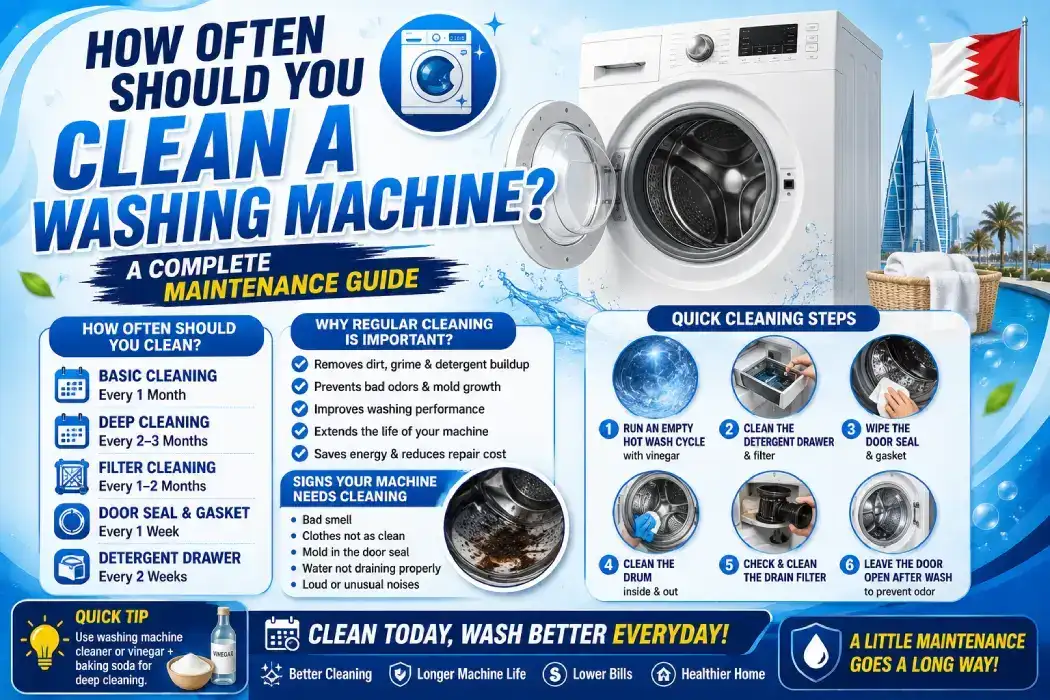
You should deep clean a washing machine’s drum and detergent drawer once a month, and wipe the door seal and gasket after every few loads. Front-load machines need more frequent attention than top-load machines because their rubber door seals trap moisture, creating ideal conditions for mold and mildew growth.
Why Washing Machine Cleaning Matters More Than People Think
A washing machine’s job is to remove dirt from clothes, but that dirt, along with detergent residue, fabric softener buildup, and lint, has to go somewhere. Some of it rinses away completely, but a portion sticks to the drum, seal, and internal hoses, building up slowly with every wash cycle.
In Bahrain, higher humidity levels mean that moisture inside the machine doesn’t evaporate as quickly as it might in a drier climate. Combined with machines often being installed in enclosed laundry areas or bathrooms with limited ventilation, this creates near-perfect conditions for mold and bacterial growth if the machine isn’t cleaned regularly.
What Happens If You Don’t Clean Your Washing Machine
Skipping regular cleaning doesn’t just affect how the machine smells. It gradually affects performance, hygiene, and even the lifespan of internal components.
- Musty odors that transfer onto clean laundry, even with fragranced detergent.
- Mold and mildew growth inside the drum and around the door seal.
- Reduced cleaning performance, since detergent residue coats the drum and reduces how effectively new detergent works.
- Clogged drainage, as lint and residue build up in filters and hoses over time.
- Higher repair costs, since buildup can eventually affect pumps, valves, and sensors.
How Often to Clean Each Part of the Machine
Different parts of a washing machine need attention at different intervals. Treating the whole machine as one single task tends to mean the smaller, easily-missed parts get neglected.
| Part | Recommended Cleaning Frequency |
|---|---|
| Drum (deep clean cycle) | Once a month |
| Door seal / rubber gasket | After every 2-3 loads |
| Detergent drawer | Every 2 weeks |
| Filter / drain pump filter | Every 1-2 months |
| Exterior and control panel | Weekly wipe-down |
| Hoses and connections | Inspect every 3-6 months |
Step-by-Step: How to Deep Clean Your Washing Machine
- Remove the detergent drawer and soak it in warm water with a little dish soap. Use an old toothbrush to scrub any residue from the corners and dispenser compartments.
- Wipe down the rubber door seal thoroughly, front-load machines especially trap water and lint in the folds of the gasket, which is where mold usually starts.
- Run an empty hot water cycle using either a washing machine cleaner or a cup of white vinegar, this helps break down detergent buildup and mineral deposits inside the drum.
- Clean the drain pump filter, usually located behind a small panel at the bottom front of the machine. Have a shallow tray ready, as some water will drain out.
- Wipe the exterior, control panel, and door glass with a damp cloth, avoiding harsh chemicals that could damage the display or buttons.
- Leave the door open after each wash to let the drum air out and dry completely, rather than closing it immediately and trapping moisture inside.
Front-Load vs Top-Load: Cleaning Differences
Front-load and top-load machines don’t require identical care, and understanding the difference helps explain why some owners deal with odor problems more than others.
Front-load machines trap water in the door seal and use less water per cycle, which sometimes isn’t enough to fully rinse away detergent residue. They need more frequent gasket cleaning and should always be left with the door slightly open between washes.
Top-load machines generally have better natural airflow and don’t suffer from seal-related mold as often, but they can develop mineral buildup around the agitator or drum plate, especially with hard water, which is common in parts of Bahrain depending on the water source.
How a Dirty Machine Affects Energy and Water Efficiency
A washing machine coated in detergent residue and mineral buildup doesn’t just smell worse, it also works less efficiently. Heating elements have to work harder to reach set temperatures when scale builds up around them, and clogged filters force the pump to work against more resistance than necessary.
Over months, this shows up as a gradual increase in electricity and water usage without any obvious cause. Many homeowners assume rising utility bills are simply the cost of a growing household, when in reality, a machine overdue for cleaning is quietly consuming more resources for the same wash results.
Regular cleaning keeps components working the way they were designed to, which is one of the simplest ways to protect both appliance lifespan and monthly utility costs, alongside the more obvious hygiene benefits.
Common Mistakes People Make
- Closing the door immediately after a wash, trapping moisture inside and encouraging mold growth.
- Using too much detergent, which leaves more residue behind than it actually cleans.
- Ignoring the detergent drawer for months, allowing buildup to clog dispenser channels.
- Never running a hot water or dedicated cleaning cycle, since most daily washes use cooler temperatures that don’t fully sanitize the drum.
- Skipping filter cleaning, leading to slow draining or unusual noises during the spin cycle.
- Overloading the machine, which reduces water circulation and leaves more detergent residue clinging to fabric and the drum itself.
Safety Precautions
Always unplug the washing machine before cleaning the drain filter or accessing internal panels. Be cautious of hot water or leftover water in the filter compartment, it can be warmer than expected even after a cycle finishes. Never mix cleaning chemicals, such as bleach and vinegar, as this can produce harmful fumes.
Signs Your Washing Machine Needs More Than Just Cleaning
Sometimes odor or performance issues go beyond what a cleaning cycle can fix, and these signs suggest it’s time to call a technician instead of continuing to clean.
Symptoms that need professional attention:
- Persistent musty smell even after a full deep clean
- Water pooling underneath the machine after cycles
- Unusual grinding, banging, or squealing during the spin cycle
- Machine not draining fully despite a clean filter
- Error codes appearing repeatedly on digital displays
These symptoms often point toward pump issues, worn seals, or drainage blockages that go beyond surface cleaning. Fix Bahrain’s washing machine repair service in Bahrain handles diagnosis and repair for these deeper mechanical issues.
What Affects Maintenance and Repair Costs
Routine cleaning itself costs little beyond basic supplies, but repair costs when problems go unaddressed vary based on a few honest factors:
- Type of issue – a clogged filter is far cheaper to resolve than a failed drain pump.
- Machine type – front-load machines often have more complex door seal and drum bearing assemblies than top-load models.
- Age of the unit – older machines may need parts that take longer to source.
- Severity of neglect – machines that have gone years without any cleaning may need more extensive servicing to fully resolve odor and drainage issues.
A technician visit typically starts with a proper diagnosis, so you understand exactly what’s being addressed before any repair work begins.
Repair vs Replacement Guidance
If your washing machine is under 7 years old and showing isolated issues, drainage, odor, or a worn seal, cleaning and targeted repair are almost always worth it. If the machine is past 8-10 years old, needs frequent repairs, or has developed drum bearing or motor issues, comparing that repair cost against a new, more efficient model is a reasonable next step.
Preventive Maintenance Checklist
- Wipe the door seal after every few loads, especially on front-load machines.
- Leave the door open between washes to let the drum air dry.
- Run a hot water or dedicated cleaning cycle once a month.
- Clean the detergent drawer every two weeks.
- Check and clean the drain filter every 1-2 months.
- Avoid overloading the drum beyond the manufacturer’s recommended capacity.
- Use the correct amount of detergent for your load size and water hardness.
- Inspect hoses and connections twice a year for wear, cracks, or leaks.
Cleaning for Commercial and High-Use Machines
Restaurants, laundromats, and property managers running machines multiple times a day face a different maintenance reality than a typical household. Higher load frequency means detergent residue and lint accumulate faster, and the cleaning schedule outlined above should be treated as a maximum interval rather than a baseline.
For commercial settings, weekly filter checks and bi-weekly deep cleans are more realistic, along with more frequent inspection of hoses and seals given the added wear from constant use. Property managers overseeing multiple units, whether in apartment buildings or serviced offices, often benefit from a standing maintenance schedule with a professional technician rather than relying on individual tenants to keep up with cleaning consistently.
Expert Recommendations
Technicians who service washing machines across Bahrain regularly see the same pattern: machines that get a monthly deep clean and have their door left open between washes rarely develop serious odor or drainage problems. The machines that need the most repair work are almost always the ones treated as fully self-maintaining, closed up immediately after every wash with no attention to the seal or filter for months at a time.
Conclusion
Cleaning a washing machine isn’t complicated, but it does need to be intentional. A monthly deep clean, regular attention to the door seal and detergent drawer, and simply leaving the door open between washes prevents the vast majority of odor, hygiene, and performance problems that owners eventually call a technician about.
If your washing machine already shows signs of a deeper issue, persistent odor, poor drainage, or unusual noises, cleaning alone won’t solve it. Reach out to Fix Bahrain’s washing machine repair team for a proper diagnosis and reliable service across Manama, Riffa, Muharraq, Isa Town, Hamad Town, and the rest of Bahrain.
Frequently Asked Questions
How often should I run a cleaning cycle on my washing machine?
Once a month is generally sufficient for most households. If you frequently wash heavily soiled items, cloth diapers, or gym clothes, running a cleaning cycle every 2-3 weeks helps prevent residue buildup from accumulating faster than usual.
Why does my washing machine smell bad even though I clean my clothes regularly?
A bad smell usually comes from mold or mildew trapped in the door seal, detergent drawer, or drum, not from the clothes themselves. Regularly wiping the seal dry and leaving the door open between washes usually resolves this within a few cycles.
Is vinegar or a commercial washing machine cleaner better?
Both work well for routine maintenance. White vinegar is a gentle, affordable option for regular use, while commercial cleaners are formulated to break down tougher residue and may be more effective if the machine hasn’t been cleaned in a long time.
Do top-load washing machines need less cleaning than front-load machines?
Generally, yes. Top-load machines have better natural airflow and don’t trap water in a door seal the way front-load machines do, so they’re somewhat less prone to mold. They still need regular filter and drum cleaning, though.
Can I use bleach to clean my washing machine?
Diluted bleach can be used occasionally for the drum, but never mix it with vinegar or other cleaning products, as this creates harmful fumes. Always check your machine’s manual first, since bleach isn’t suitable for every interior material.
Why is my washing machine not draining properly even after cleaning the filter?
If cleaning the filter doesn’t resolve drainage issues, the problem may be a clogged drain hose, a failing drain pump, or a blockage further in the drainage system. This typically needs a technician to inspect and resolve properly.
How long does a washing machine usually last with proper maintenance?
Most washing machines last 8 to 12 years with regular cleaning and care. Neglecting maintenance, especially skipping filter cleaning and door seal care, can shorten that lifespan considerably due to drainage strain and mold-related component wear.
Should I leave the washing machine door open all the time?
Leaving it open between washes is recommended to let the drum dry out and prevent mold. It doesn’t need to stay open constantly when the machine isn’t in use, just enough between cycles to avoid trapping moisture inside.
Does hard water affect how often I need to clean my washing machine?
Yes. Hard water leaves mineral deposits inside the drum and on heating elements over time, which can require more frequent cleaning cycles and occasionally a descaling treatment to maintain performance and prevent buildup-related damage.
Why does my detergent drawer have mold or residue even though I clean my clothes fine?
Detergent drawers are often overlooked during routine cleaning, and fabric softener in particular leaves a sticky residue that traps moisture. Removing and washing the drawer every two weeks prevents this buildup from developing further.
Is it normal for a washing machine to have a slight smell after months of use?
A very faint smell can happen naturally, but a strong or persistent musty odor is not normal and usually indicates the seal, drum, or filter needs attention. A deep clean typically resolves it within one or two cycles.
When should I call a technician instead of just cleaning the machine myself?
If odor persists after a deep clean, if water pools under the machine, or if you notice grinding, banging, or repeated error codes, these point to mechanical issues rather than surface buildup, and are best handled by a certified technician.